01 · Origins
Ancient roots
The ia, Romania’s traditional blouse, has a history spanning millennia, with roots in the Cucuteni culture and in the dress of the Thracians and Geto-Dacians, as shown on Trajan’s Column and the Adamclisi monument.

The story of the ia
“The art of the traditional blouse with embroidery on the shoulder (altiță) — an element of cultural identity in Romania and the Republic of Moldova” was inscribed on UNESCO’s Intangible Cultural Heritage list on 1 December 2022. The date is symbolic: it is also Romania’s National Day.
01 · Origins
The ia, Romania’s traditional blouse, has a history spanning millennia, with roots in the Cucuteni culture and in the dress of the Thracians and Geto-Dacians, as shown on Trajan’s Column and the Adamclisi monument.
02 · Symbols

This garment was a true social and spiritual code, one that spoke of the standing, age and origins of the woman who wore it.
The symbolism and colours of these blouses were most often rendered in geometric shapes: stylised depictions of nature and its phenomena, symbols of the rhythm and passing of life — some meant to ward off evil, others to bring good luck.
03 · Royalty
The Queens of Romania — though all foreign-born (German, British-Russian) — adopted traditional dress as an act of deep political commitment and love for the culture. They turned peasant costume into official attire for diplomatic and royal protocol, saving the craft from disappearing as the country modernised.
04 · Fashion
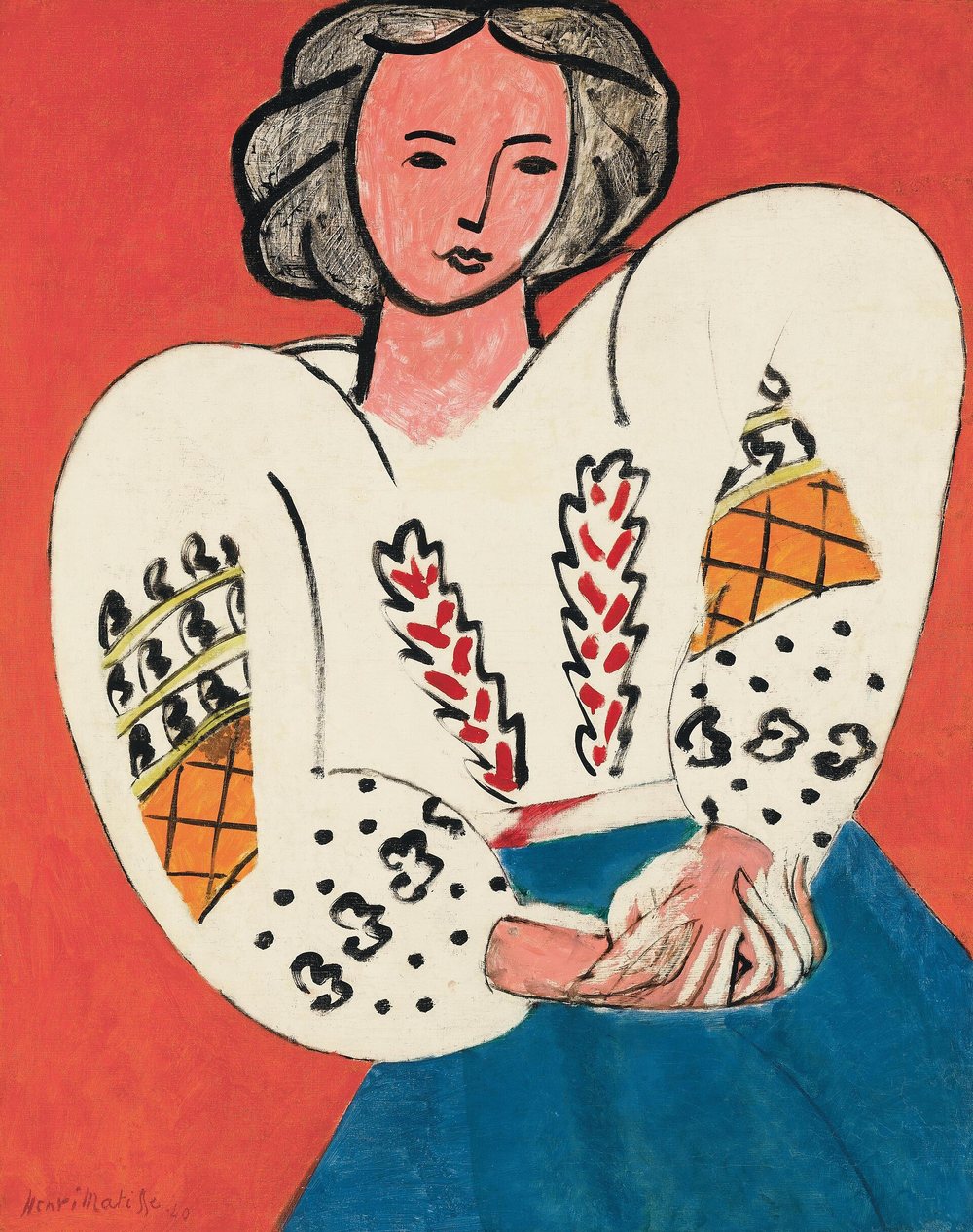
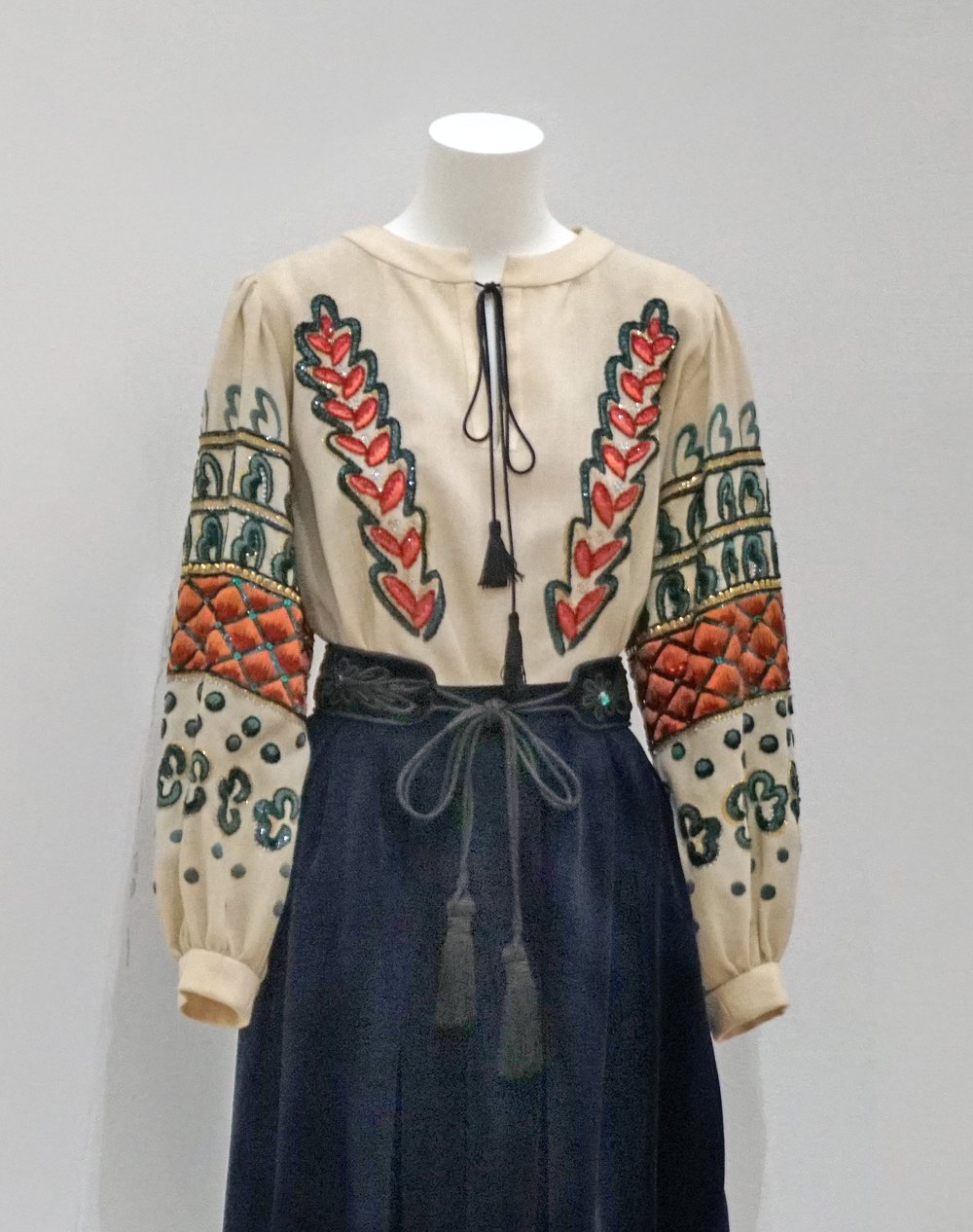
The originality and beauty of these symbols, together with the distinctive cut of the sleeves, have over time inspired many celebrated fashion houses, which adopted and promoted them.
Contact
Call, write or send a message through the contact form.

